
Ultimate Guide To Top Concrete Leveling Products For Homeowners
Find out which trusted products deliver reliable results for DIY and professional concrete leveling projects alike.
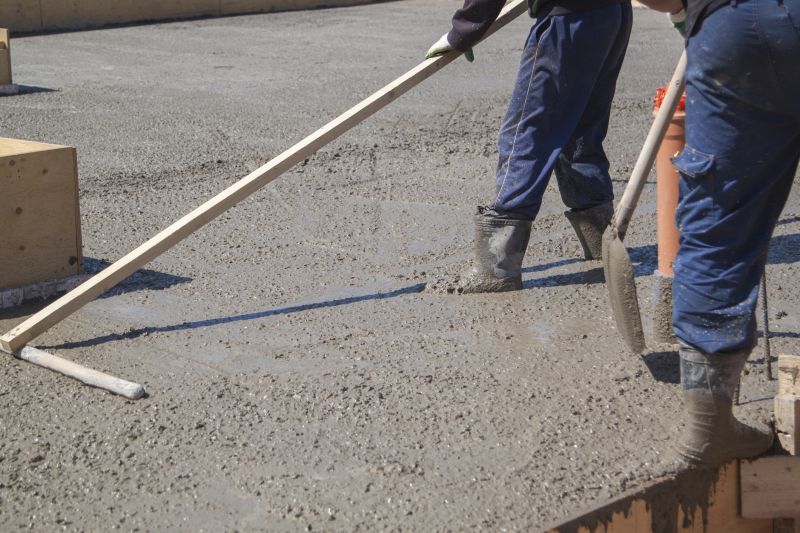 Concrete leveling is an essential process for maintaining a safe and visually appealing property, especially in areas where uneven surfaces can pose safety risks or diminish curb appeal. Various products are available to assist in this task, ranging from simple patching compounds to advanced self-leveling solutions. The selection of the right product depends on factors such as the extent of the unevenness, the location of the concrete, and the desired longevity of the repair. Proper application and choosing suitable materials can help ensure a durable and effective result.
Top Overall Option
Self-Leveling Concrete Compound
A versatile self-leveling concrete compound offers a smooth, even surface that can be used for various repair projects. Its ease of application and ability to fill low spots make it suitable for both DIY enthusiasts and professionals. This product typically features good adhesion properties and a manageable curing time, providing a reliable solution for uneven concrete surfaces.
Types of Products For Concrete Levelings
Self-Leveling Underlayment
Designed to create a flat surface for flooring installation or repair, this product flows easily and levels itself without the need for troweling.
Concrete Patching Compound
Ideal for filling small cracks and surface imperfections, providing a quick fix for minor unevenness.
Polyurethane Foam Levelers
Expanding foam formulations that lift and level sunken slabs, suitable for larger voids or significant unevenness.
Hydraulic Cement Mixes
Heavy-duty mixes used to repair cracks and stabilize sinking slabs, offering strong adhesion and durability.
Polymer Modified Concrete
Enhanced with polymers for improved bonding and flexibility, suitable for areas with slight movement.
Rapid Curing Concrete Patches
Formulated to set quickly, ideal for urgent repairs or projects requiring minimal downtime.
Liquid Cement Patch
A pourable solution that can fill and level larger areas with ease, offering a smooth finish.
Epoxy Concrete Repair Kits
Two-part systems that bond strongly and are resistant to wear, suitable for high-traffic areas.
Fiber-Reinforced Concrete
Contains fibers to enhance strength and crack resistance, used for structural repairs.
Polymer Resurfacing Products
Used to restore surface smoothness and appearance, often applied over existing concrete.
Acrylic Concrete Sealers
Provides a protective layer that can help prevent future damage and surface deterioration.
Cementitious Overlays
Thin layers of cement-based material used to level and improve the surface finish.
Vapor Barrier Coatings
Applied to prevent moisture infiltration, which can affect the adhesion and longevity of repairs.
Fast-Set Hydraulic Patches
Quick-setting mixes suitable for urgent repairs and small-scale leveling tasks.
Popular Choices
Widely used for its ease of application and ability to create a smooth, level surface.
Commonly chosen for sealing cracks and minor surface issues to prevent further damage.
Popular for lifting sunken slabs and filling voids with minimal disturbance.
Trusted for structural repairs and stabilization of sinking or cracked slabs.
Favored for its strong bond and durability, especially in high-traffic areas.
Versatile for filling larger areas with a smooth finish, suitable for various repair needs.
Popular for finishing and sealing concrete surfaces after leveling.
Chosen for its enhanced bonding and flexibility in areas prone to movement.
Ideal for quick repairs requiring minimal downtime.
Used to improve surface appearance and durability with a thin overlay.
Selected for structural repairs requiring added strength and crack resistance.
Applied to prevent moisture issues that can compromise repairs.
Popular for protecting and extending the life of repaired surfaces.
In Mansfield, Ohio, homeowners and contractors alike seek reliable products that can accommodate different types of concrete surfaces, whether it is a sidewalk, driveway, or patio. Many of these products are designed to be easy to apply, allowing for DIY repairs or professional installations. Understanding the differences among the various options can help users select the most appropriate solution for their specific needs.
While some products are formulated for minor surface adjustments, others are capable of addressing more significant unevenness. It is important to consider the curing time, adhesion properties, and compatibility with existing concrete when selecting a leveling product. Proper surface preparation and following manufacturer instructions are critical to achieving the best results and ensuring the longevity of the repair.
Overall, the market offers a broad spectrum of concrete leveling solutions, each suited to different scenarios. Whether for small patches or large-scale repairs, the right product can make a substantial difference in restoring the safety and appearance of concrete surfaces in Mansfield and beyond.
Key Buying Considerations
- Extent of unevenness: Assess whether the surface requires minor patching or significant leveling.
- Type of surface: Determine if the product is compatible with driveways, sidewalks, or patios.
- Application method: Consider ease of use, especially for DIY projects versus professional applications.
- Curing time: Check how long the product takes to set and cure for planning repairs accordingly.
- Adhesion properties: Ensure the product bonds well with existing concrete surfaces.
- Flexibility and movement: For areas prone to shifting, select products with some flexibility.
- Load-bearing capacity: For surfaces subjected to weight, choose products designed for structural integrity.
- Environmental conditions: Consider temperature and humidity during application and curing.
- Durability: Look for products that resist cracking, shrinking, or other forms of deterioration.
- Finish appearance: Decide if a smooth, textured, or matte finish is preferred after repair.
- Compatibility with existing materials: Confirm that the new material adheres well to old concrete or overlays.
- Cost and availability: Balance budget considerations with product quality and availability.
- Safety and handling: Review safety instructions and required protective gear during application.
- Long-term maintenance: Consider how easy it is to clean or reapply protective coatings if needed.
- Local regulations: Ensure the product complies with any local building codes or standards.